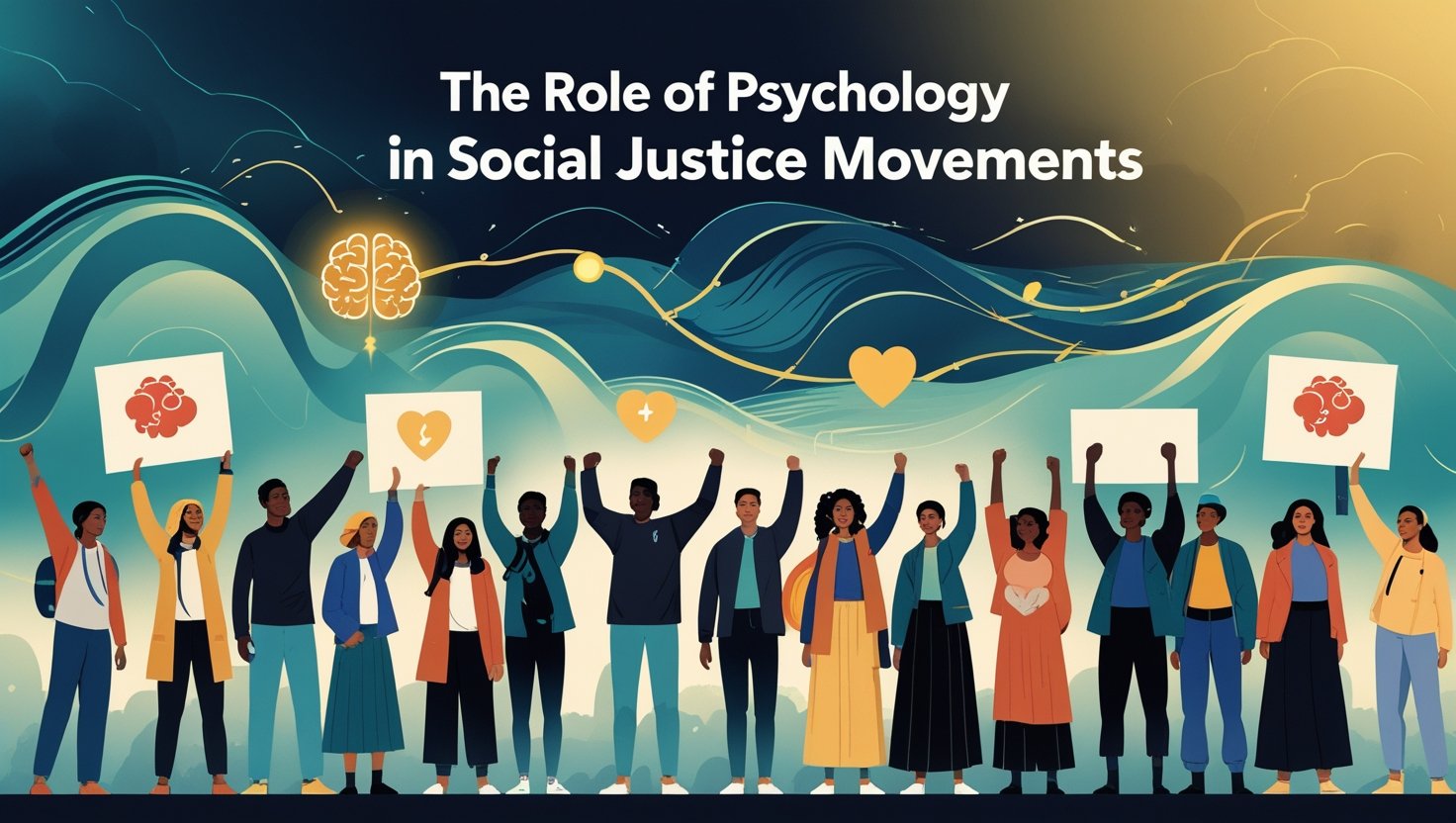
In today’s time, when social justice movements are going on across the world, it is very important to understand what role psychology plays in these movements. When people stand up for a cause, they do not just raise slogans or protest, but their emotions, mindset, and group behavior all come together to create a powerful movement. Psychology is the science of understanding the human mind, and from this, we come to know how people react to seeing injustice and how they can be motivated. Social justice topics like racism, gender inequality, poverty, or human rights violations are present in every society in some form or the other. Psychology helps activists to understand this.
What is the unconscious bias of people, and when and why do they adopt prejudices?
When a community feels that injustice is being done to them, they join others and raise their voice. Here, psychologists guide them on how to avoid emotional burnout and how to present their cause logically. Psychology also explains that the system does not change with just slogans; rather, there is a need to change the behavior and attitude of people. Until the mindset changes, the impact of any movement is temporary. Therefore, every social justice leader must understand the basic psychological principles so that they can bring justice to their community. To give direction and to take a fair and just practical step towards society.
Understanding Collective Behavior and Group Dynamics:
Whenever a social justice movement is formed, it is not started by a single person; but a group or community comes together to take it forward. Here, the biggest role of psychology is in understanding collective behavior and group dynamics. When people are in a group, their way of thinking and decision-making is completely different from that of a person alone. Factors like group pressure, peer influence, and social identity change the mindset of every person. Often, when people are alone, they do not show much courage on any issue, but when they see that other people are also thinking like them, they unite and become bold. Psychologists study group behavior. We do this to understand when the protest will be peaceful and when it can turn violent, and how it should be handled. Leaders should know that their every word can change the mood of the group.
If the communication is positive, the energy of the group is constructive, and if it is negative, it can become destructive as well. For this, training and awareness are very important. These roles are also important in group dynamics. In every group, there are leaders, followers, and influencers who decide everyone’s mood. Psychology also tells that in a group, people give up their identity and adopt a collective identity. Due to this, they feel more powerful, and the movement gets stronger. If these dynamics are correct, if it is handled properly, then the impact of social justice movements is stronger and more sustainable.
The Impact of Bias and Prejudice on Social Change:
The biggest obstacle in the path of social justice is prejudice and bias, which often people are not even aware that they are a part of it. Unconscious bias means that you judge someone else based on race, gender, religion, or social status without knowing it, and that is visible in judgment decisions. This bias remains in society till the time people do not challenge their thinking, and here the role of psychology becomes very important. Psychologists make people understand through awareness programs and workshops how the stereotypes in their minds are created and how they can be broken. If people ask their questions, then they should take them seriously. If the thinking is not changed, then no social justice movement can give long-term results. For example, if a community is raising its voice against racism, but unconscious bias is strong on the other side, then it takes time to change the behavior of the system.
Hence, it is important to understand and treat the prejudice. Training and strict rules are necessary to tackle unconscious bias in educational institutions, workplaces, and government policies, too. Psychology also highlights that bias is not just in others but in every human being at some level or the other. Accepting it and working on it is the beginning of change. Social change is impossible until people are open-minded. The help of psychology increases awareness, and people start understanding others. This develops a culture of equality and justice in society, and this is the victory of any social justice movement.
The Role of Emotions in Mobilizing Action:
Whenever there is a social justice movement, people are not inspired by just seeing facts or statistics; rather, their emotions play the most important role. Psychology tells us when a person’s mind becomes emotional and how that emotion forces someone to take action. Anger is one such emotion that gives people the courage to speak out against injustice and come out on the streets. But if this anger is not in the right direction, it can turn into violence and destruction. That is why psychologists explain to leaders how to control the crowd and make the emotions productive. Empathy is also a powerful emotion. When people feel the pain of others, they feel more connected and support a cause. Social media and videos amplify emotions and make a story go viral, which increases awareness and people become a part of the movement. Fear also works sometimes.
When people realize that their future is in danger if they remain silent, they turn towards activism Psychologists understand emotions and give strategies as to when and how to motivate the crowd When there is a balance between emotions and logic, the movements remain peaceful and their message is also powerful That’s why A social justice activist should understand how to understand emotions and how to convert them into positive action so that the purpose is accomplished and sustainable change comes in society.
Psychological Strategies for Sustaining Activism:
When social justice movements start, people often start with a lot of passion and enthusiasm, but over time, many people suffer from burnout or hopelessness. This is where psychology comes in handy. Psychologists share tools and strategies to keep activists emotionally strong. The first tool is resilience. Resilience means not losing courage despite difficulties and facing challenges. For this, positive self-talk and realistic expectations are very important. Another strategy is self-care. Many people get so involved in activism that they forget about their health and mental peace. When their health dips, they give up activism. Hence, self-care routines are just as it is very important as eating right, sleeping, and taking time to relax.
The third important tool is community support. When people feel lonely, they give up quickly, but when they have a support group around them, they stay motivated. Group meetings, workshops, and safe spaces give energy and new ideas to activists. Psychology also suggests that goals should be kept realistic and short-term so that every small victory maintains motivation. If only a big goal is kept, the fear of failure can destroy motivation. Social justice leaders must understand how stable their team members are in terms of emotional and mental health. If someone is facing stress or anxiety, they should get timely help and counselling. This way, activism can be sustained for the long term, and even new people can confidently join the movement.
Conclusion:
When we talk about building a fair and just society, laws and slogans do not work, but human thinking and behavior have to be deeply understood. This is where psychology plays its real role. Every social justice movement, whether it is against racism, gender equality, or poverty, is not effective until people’s mindsets change. Psychology helps us understand how a person’s unconscious bias shapes their actions and how emotions unite a crowd and then force them to action. Psychologists teach activists how to sustain their energy and how to avoid burnout. When people in a movement are emotionally, mentally, and socially strong, they become more impactful and can bring about actual policy change in the system. It is also important that we teach the youth basic concepts of psychology in schools and colleges so that they can understand how to fight against prejudices, stereotypes, and fear.
If every activist has the basic skills to understand the human mind, then they can design their actions and slogans more effectively and can motivate society. Psychology is not just limited to the lab and classroom, but it has value in every movement, every protest, and every awareness campaign. If we want our fight for social justice to be sustainable, then it is very important to integrate psychology into it. Together, we can build a society where justice and equality are not just a dream but a reality
FAQs:
Q1: How does psychology contribute to social justice movements?
Psychology is the science of understanding the human mind and group behavior. When people stand up for a social justice cause, they don’t just raise slogans or protest — their emotions, mindsets, and collective behavior come together to build a powerful movement. Psychology helps explain how people react to seeing injustice, what unconscious biases they hold, and how they can be motivated to change. Activists use psychological insights to understand that without changing mindsets, systemic change is not sustainable.
Q2: Why is understanding group dynamics and collective behavior important?
When people gather in a group, their way of thinking and decision-making is completely different from when they are alone. Factors like group pressure, peer influence, and social identity reshape mindsets. Often, people may stay silent alone but become bold when they see others thinking the same way. Psychology helps leaders understand how their words can change a group’s mood, whether to keep a protest peaceful or prevent it from turning violent. Managing group dynamics properly makes a movement stronger and more sustainable.
Q3: How do bias and prejudice hinder social change?
The biggest obstacles to social justice are bias and prejudice, which people often don’t even realize they hold. Unconscious bias means judging others based on race, gender, religion, or social status without realizing it. This bias stays in society until people challenge their own thinking. Psychology helps by raising awareness through training and workshops, showing how stereotypes form and how they can be broken. Without tackling bias at the personal and institutional level, no social justice movement can deliver lasting results.
Q4: What role do emotions play in mobilizing action?
People are not inspired by facts and statistics alone; emotions play the most powerful role. Anger, for example, gives people the courage to speak out against injustice, but if it’s not channeled properly, it can lead to violence. Empathy is another strong emotion that connects people to a cause when they feel others’ pain. Psychology helps leaders understand how to guide emotions productively, balance them with logic, and keep movements peaceful and impactful. Social media often amplifies emotions, making this understanding even more important.
Q5: How can activists sustain their energy and motivation?
Many social justice movements start with high passion but fade when people face burnout or hopelessness. Psychology offers tools to keep activists emotionally strong. Resilience is key staying determined despite difficulties. Self-care is vital too activists need to care for their health and mental well-being to stay committed. Community support, group meetings, and safe spaces provide motivation and fresh ideas. Setting realistic, short-term goals helps maintain momentum. When activists care for their mental health, they can stay engaged longer and inspire new people to join confidently.