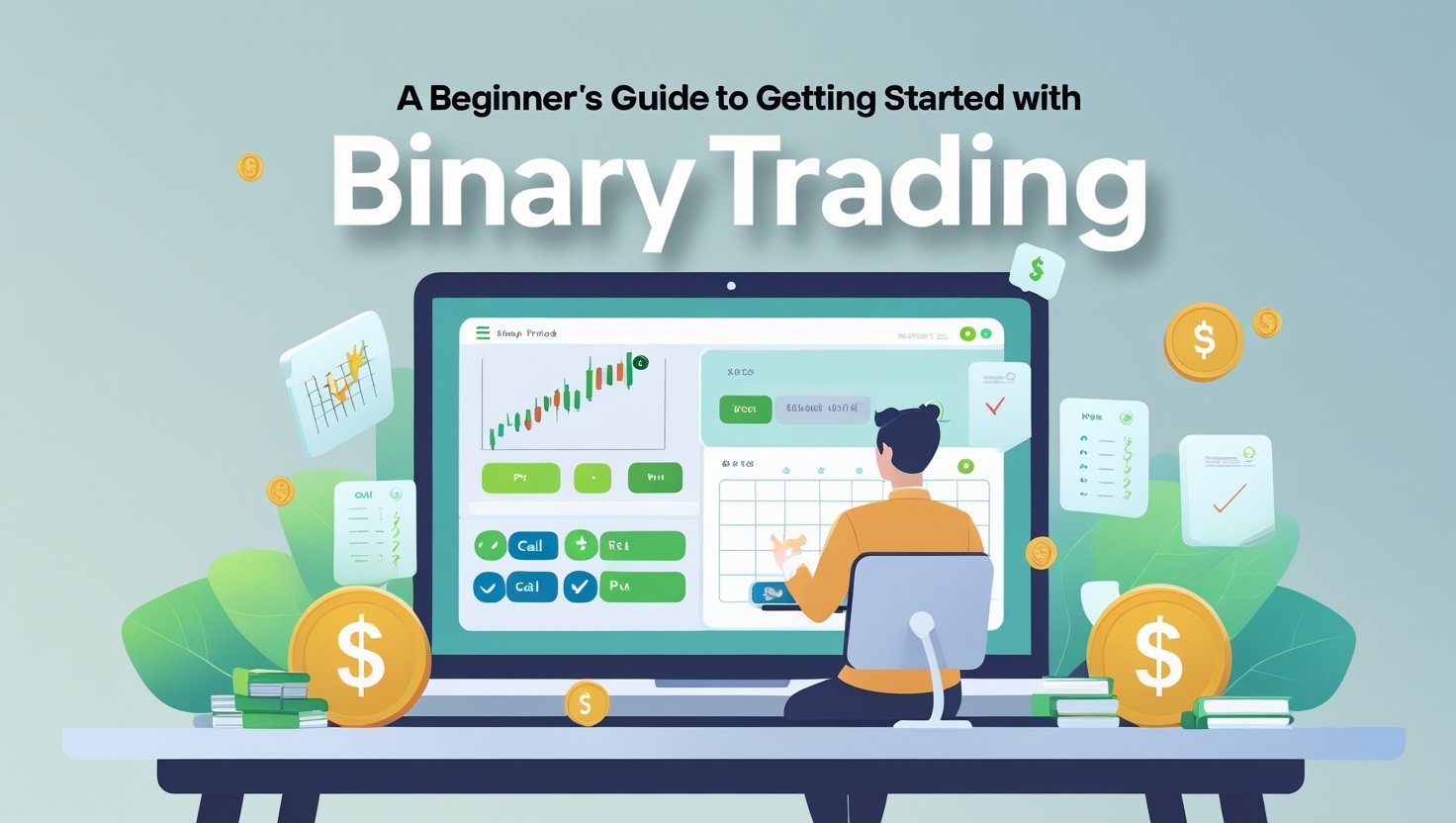
Binary trading is one such financial instrument that attracts beginners because its concept seems very simple. In it, you have to decide whether the price of an asset will go up or down within a fixed period. If your prediction is correct, you receive a fixed payout; otherwise, you lose your investment. It is called ‘binary’ because there are only two possible outcomes in it – win or lose. Often, people consider binary options as gambling, but in reality, it is a serious trading tool that demands discipline and strategy. Beginners should understand that binary trading is short-term, and it can be difficult to predict the market correctly.
Therefore, investing money without understanding and a strategy can cause huge losses. The purpose of this introduction is to let you know that it is possible to earn money from binary trading, but the risk is also equal. If you are ready to learn and practice it, you can gradually become an expert in it. You should use demo accounts and start with small amounts first so that you can understand the market trend. This guide will tell you how binary trading works, how to choose a broker, what the basic strategies are, how to manage risk, and what mistakes to avoid. Patience is the most important thing in the beginning that every new trader learns.
How Binary Options Work:
When you start binary options trading, the first thing you need to understand is its basic structure. First, you have to choose an asset, such as a currency pair (USD/EUR), stock, commodity (gold or oil), or an index. Then you have to predict whether the price of this asset will go up or down after a specific period. For this prediction, you have to set the expiry time, which can be from a few seconds to a few hours. After this, you set your investment amount and execute the trade. If your prediction is correct, then you get a fixed percentage return, which can be from 60% to 90%, but if the prediction is wrong, then you lose your entire amount.
For example, if you invest $10 and the payout is 80%, if you win, you will get $18, but if you lose, then you will lose the entire $10. This simple structure of binary trading often seems like an opportunity to make quick money to people, but in reality, it is high risk. That is why every trader should understand that trading blindly without research or market analysis can lead to losses. Time management and correct prediction are the key things that lead you to success. Practice, observing the market, and using indicators are very important.
Choosing a Reliable Broker:
If you are new to binary trading, the first step is to choose a good broker. A broker is a platform that provides you with trading facilities. Often, people quickly create accounts with unregulated brokers after seeing attractive ads, which later turn out to be fraudulent. So, always check whether the broker is regulated or not. Brokers from Europe or Australia are more reputable as they have to follow strict rules.
While choosing a broker, see whether their trading platform is user-friendly, whether you get a demo account or not, what the minimum deposit and how much percent the payouts are. The support system should also be strong so that if you face any issues, you can get immediate help. You should also check the background of the broker by reading reviews and taking feedback from other traders. For beginners, the best brokers are those who keep the minimum deposit low and also provide beginner’s guides. Good brokers also issue risk warnings that remind you that trading can loss of money. Never trust attractive bonuses or unrealistic promises from a broker. Read all the terms and conditions in detail and understand the payout structure before creating an account. All these things give you a safe and transparent trading experience.
Basic Strategies for Beginners:
For beginners, it is very important to formulate strategies in binary trading because, without a strategy, trading becomes just a matter of luck.
First of all, you should understand what a strategy is. It is a plan that guides you when and how to trade. The simplest strategy is trend following, in which you trade by observing the trend of the market. If the market is going up, you choose the “call” option, and if it is going down, you choose the “put” option.
The second simplest strategy is news-based trading. When any major economic news comes, the price of the asset moves suddenly. At this time, you have to do a little analysis and predict which way the price will move.
Moving averages and basic technical indicators are also useful for beginners; they help in predicting the trend. Always remember that you should focus on a single asset until you understand its movement and behavior. Too complex strategies create confusion in the beginning. You should practice the strategies on a demo account so that you do not lose real money. Even after making a good strategy, patience and discipline are important because the market is not the same all the time. Keeping your emotions under control in every trade is the biggest strategy that keeps you consistent.
Risk Management Tips:
In binary trading, risk management acts as the backbone for every new trader. Without risk management, all the strategies you make will be useless. The first rule is never invest money that you cannot afford to lose. This is called “risk capital”.
The second rule is that you should keep your trade size small; often, experts say that never invest more than 2% of the total capital in a single trade. Apart from this, it is also important to set a daily loss limit, meaning if your daily target loss is hit, then do not trade anymore on that day. This saves you from impulsive trading.
Another common mistake is to put double the amount to recover losses; this often results in bigger losses. Controlling emotional trading is also a part of risk management. You should always make a trade plan and follow it. Risk should be calculated by using market signals or indicators. Never be overconfident. Proper risk management helps you keep your capital alive and makes the learning process stable. Without risk management, traders often exit the market too early.
Common Mistakes to Avoid:
Binary trading beginners make some common mistakes repeatedly, which prove to be very costly for them. The first mistake is trading without any plan. People think they will make money by luck, but the market is always unpredictable.
The second big mistake is that people come with only a “get-rich-quick” mindset and think it is a shortcut. Patience and analysis are important in binary trading.
The third mistake is emotional trading – placing a double trade on a loss or investing more out of greed to make a profit. Beginners often fall for fake signals and scams that give them the illusion of guaranteed profits. On the other hand, beginners often ignore risk management, invest large amounts, or use all-in strategies that empty the account quickly.
Another mistake is that people do not take demo accounts seriously. Demo practice gives you a chance to learn in real market conditions without losing money. Beginners should also focus on analysis tools and charts. You should learn from every mistake and maintain a trading journal in which you note your trades. This will help you understand where you made a wrong decision and how to improve.
Conclusion:
Now that you have understood the basic structure of binary trading, brokers, strategies, risk management, and common mistakes, the most important thing is to start smart. Never think of it as gambling; it is a skill that is strengthened with time and practice. First of all, you should choose a trusted broker, then practice on a demo account until you are confident. Start with small amounts and increase the investment amount as you gain experience. Always set realistic goals and do not overconfidently dream of big profits in overconfidence.
You should be continuously learning and following market updates, as market conditions change all the time. Do not ignore risk management and consider losses as part of learning. You should review your trades every week and see which strategy you are comfortable with. Joining a good trading community is also beneficial as it provides tips and practical insights. Ultimately, patience and discipline are the qualities that make you a consistent and successful binary trader. The purpose of this guide is to help you start your binary trading journey confidently and intelligently without fear and build your financial growth smartly.
FAQs:
- Is binary trading really as simple as it sounds?
Binary trading might look simple because you only predict whether an asset’s price will go up or down in a fixed period, but in reality, it involves a high level of risk and market analysis. Without discipline, strategy, and proper risk management, it can quickly lead to losses. Beginners should always practice first and learn the market trends before trading with real money. - How do I choose a safe and reliable binary trading broker?
Look for brokers that are regulated by reputable financial authorities, especially those based in Europe or Australia. Make sure the platform offers demo accounts, clear payout structures, a user-friendly interface, and reliable customer support. Avoid brokers who promise guaranteed profits or unrealistic bonuses, and always read reviews and the terms and conditions carefully. - What are the simplest strategies a beginner can use?
The most beginner-friendly strategies include trend following (trading based on market trends), and news-based trading (predicting price movements based on major economic news). Beginners can also use simple technical indicators like moving averages to identify trends. It’s important to keep strategies simple at first and to focus on understanding how a single asset behaves before trying more advanced methods. - Why is risk management so important in binary trading?
Risk management helps protect your trading capital and prevents large losses. Key rules include never investing money you can’t afford to lose, keeping trade sizes small (usually no more than 2% of total capital per trade), and setting a daily loss limit. Avoid chasing losses or trading emotionally, as this often leads to even bigger losses. - What common mistakes should beginners avoid in binary trading?
Some frequent mistakes include trading without a plan, expecting quick profits, emotional trading (like doubling investments after losses), ignoring demo practice, and neglecting risk management. Beginners should also be careful of scams and fake “guaranteed profit” signals. Keeping a trading journal and regularly reviewing trades can help identify mistakes and improve over time.